
Find Auburn Residents
A useful Auburn residents directory is a chain of dated records, not one master roll. Begin with an address when the goal is a parcel or a past household. Begin with a name when a court, vital, voter, directory, or archival record is the better fit. The strongest result identifies what the record actually says, who keeps it, and the date it represents. A parcel owner, a registered voter, a deed party, and a directory occupant are different kinds of evidence.
Start with the least sensitive official source that matches the question. A current parcel entry can produce a tax-map number and deed reference. A library volume can place a person at a historic address. The state voter tool is intended for an individual registered voter, while a court result needs the case number and a clerk check. When the record is not online, the county office, city custodian, library, or County Historian is the documented next step.
- Confirm the city, town, and postal address. Auburn delivery can extend into nearby towns, which may use a different vital-record custodian.
- Use Cayuga GIS or the county property tools to capture the municipality, parcel location, tax-map number, and deed reference.
- Search the Cayuga County SearchIQS index for the recorded transaction and preserve the returned date or book reference.
- For a historical household, compare a directory year with newspaper, census, cemetery, or Historian material rather than treating one line as a complete family list.
- Send a narrow request to the identified custodian when the needed file is offline, restricted, or older than the portal coverage.
Auburn Records Offices
These offices provide the main public-records paths behind an Auburn residents directory. Their holdings overlap at an address, but the roles do not. The recorder documents transactions, the parcel office maintains property attributes, and the voter tool is a protected individual lookup. Ask each office for its own record, date span, and copy method.
Cayuga County Clerk
160 Genesee Street
Auburn, NY 13021
315-253-1271
Real Property Services
160 Genesee Street, fifth floor
Auburn, NY 13021
315-253-1270
Cayuga PROS property tools
New York Elections
Statewide registered-voter service
Cayuga County selection required
County FAQ contact: 315-253-1285
Auburn Parcel Records
For an address question, Cayuga GIS is the best starting point because it separates municipality, location, owner, deed reference, and tax-map number. Its documented Location search expects a street number plus street name. Owner searches use a last-name-first pattern, and a deed reference uses book and page separated by a hyphen. A geocoder point is only a way to get near a parcel. Click the parcel before relying on its fields.
| GIS search field | Documented format | Why it helps |
|---|---|---|
| Tax Map Number | Section-block-lot, such as 115.60-1-38.1 | Anchors the parcel across map and assessment records. |
| Owner | Last, First or Last, First M | Finds a public owner field, not a verified occupant. |
| Location | Street number plus name | Moves from a postal address to the parcel map. |
| Deed Reference | Book-page | Connects a parcel to a recorded instrument when present. |
The Cayuga property-search portal and tax-map tools are the official property entry points shown here.
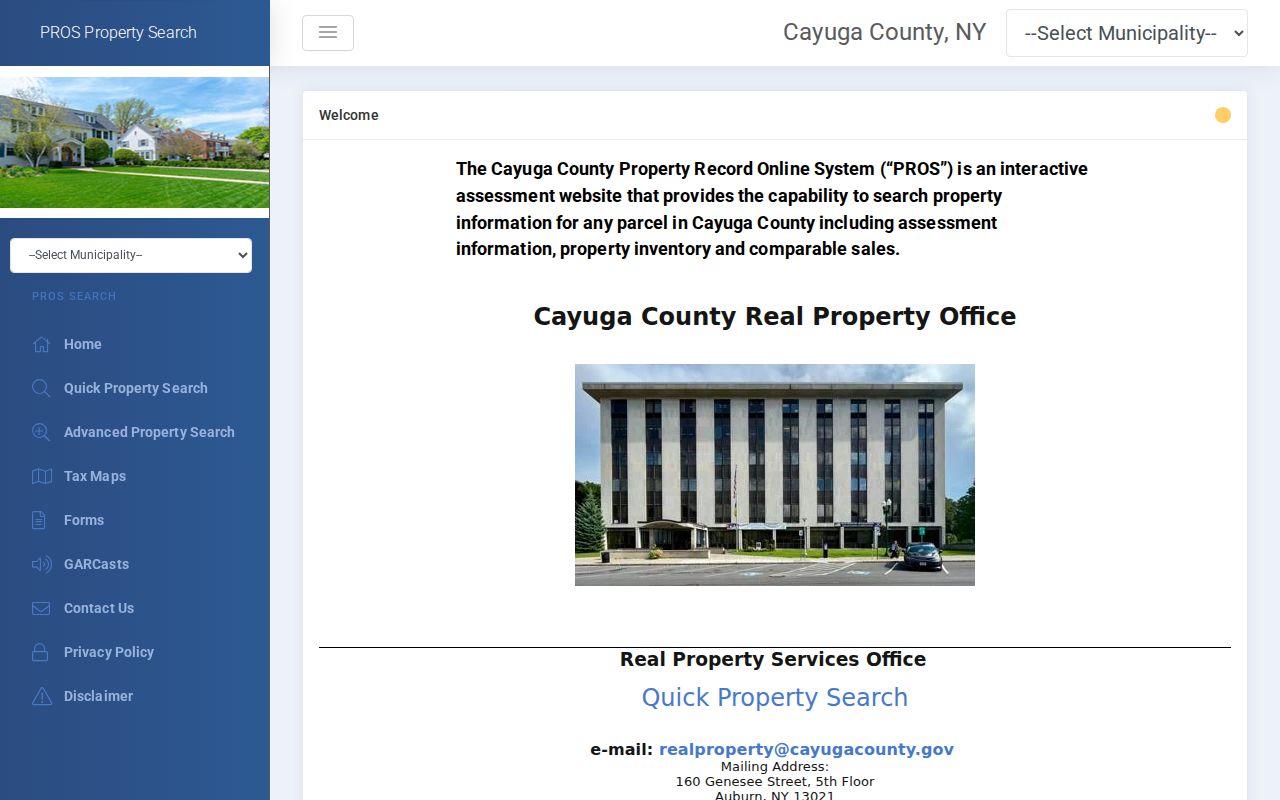
The property screen supports a parcel-first search path. Its owner and mailing fields should not be rewritten as a current household list, since ownership, mailing address, and occupancy are separate facts.
- Parcel
- A mapped unit of land identified by a tax-map number.
- Situs address
- The physical parcel location used for mapping and local records requests.
- Index
- A finding aid that points to a record; it is not always the record image itself.
- Criss-cross directory
- A historical directory arranged by address or street rather than only by name.
Auburn Access Boundaries
New York’s Freedom of Information Law, Public Officers Law Article 6, sections 84 through 90, is a way to request agency records, not a way to open every record. An agency generally must grant, deny, or acknowledge a written request within five business days. If more than 20 business days are needed after acknowledgment, the agency must give written reasons and a date certain. Ordinary copies up to 9 by 14 inches have a statutory ceiling of 25 cents a page.
For an Auburn request, name the department, record type, address or party, date span, and preferred electronic delivery. City Clerk routes general municipal requests, Code Enforcement has permit and certificate files, Real Property Services handles assessment material, and the County Clerk holds recorded instruments. A vital record remains subject to its separate eligibility rules and is not made open by FOIL. The New York FOIL information explains the general request and appeal structure.
Personal use boundary. Public material can be incomplete, dated, or protected. Do not use an Auburn record trail to stalk, harass, intimidate, or harm anyone.
Auburn Resident Sources
Each current source answers a narrow question. No official source reviewed is a complete public list of everyone living in Auburn. Use the source label as part of the result: an owner field is ownership evidence, a recorded instrument names transaction parties, and the voter tool serves a registered voter who enters the required details.
| Source | What it can establish | Custodian | Access route |
|---|---|---|---|
| Parcel and assessment record | Parcel location, public owner field, deed reference, values, and map context | Cayuga Real Property Services | GIS, PROS, office, or phone route |
| Recorded real-estate index | Grantor, grantee, recording date, book/page, and instrument trail | Cayuga County Clerk | Free SearchIQS index; image, book, or counter route as available |
| Voter Lookup | An individual registered-voter query | New York State elections | County, name, date of birth, and ZIP query |
| City directory | A dated resident, business, street, or property-owner entry | Seymour Library and digital collections | Library, microfilm, NY Heritage, and historical repositories |
| Vital or cemetery material | An event or interment lead when eligibility and date rules allow | Auburn Registrar and related custodians | Official application, archive, or local request channel |
When the task is to verify one named person against several records, the Auburn resident lookup approach keeps each match tied to its date and record type.
Auburn Voter Lookup
New York Voter Lookup is not a street-wide directory. It is a self-service query for a registered voter and requires County, Last Name, First Name, Date of Birth, and ZIP Code. For Auburn, select Cayuga County. The reviewed official page did not expose every field shown after a live search, so a result should not be promised to display a particular status or address detail.
| Required field | Entered information |
|---|---|
| County | Cayuga County for Auburn queries |
| Last Name and First Name | The registered voter’s name |
| Date of Birth | MM/DD/YYYY format |
| ZIP Code | ZIP associated with the registration or address |
The official voter lookup shows the input surface reviewed for Auburn.
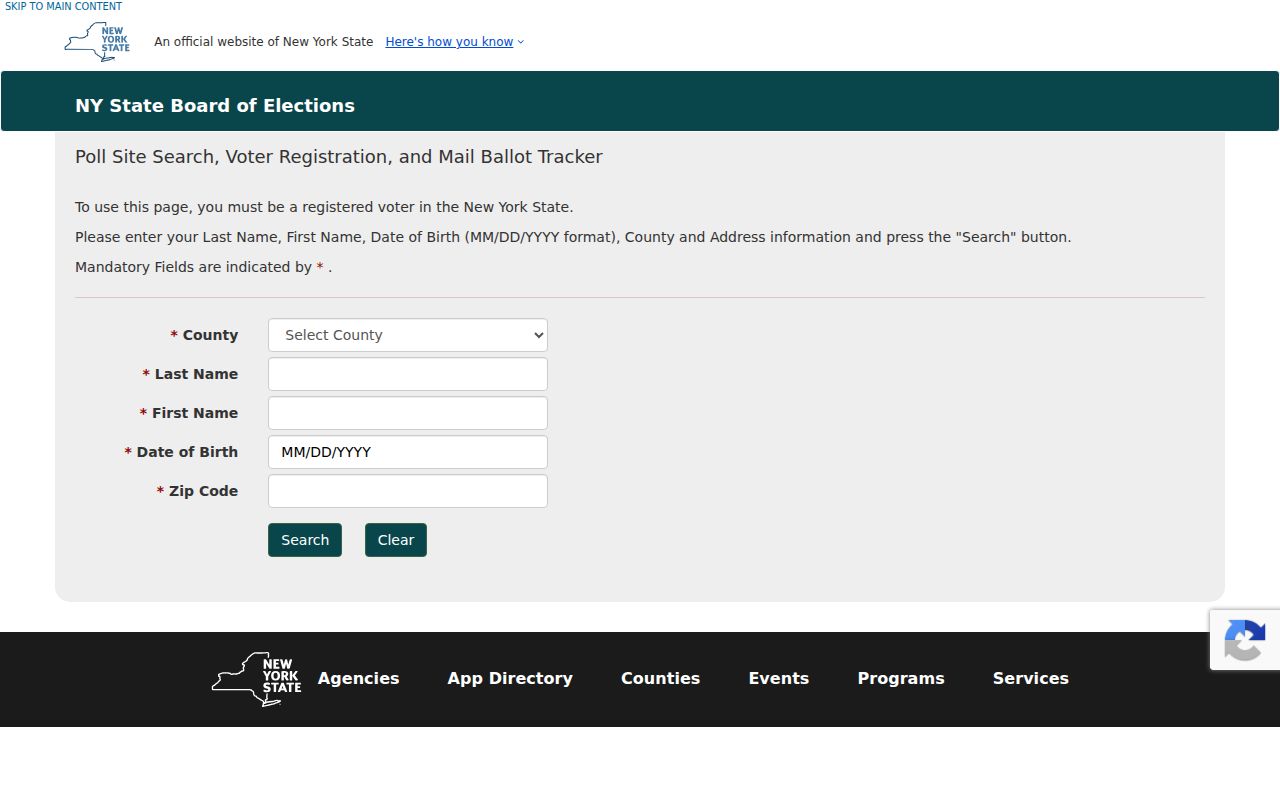
Election Law limits statewide voter-data use and withholds identifiers such as driver-license and Social Security information. A non-match can reflect a spelling, update, confidential status, or timing issue. It is not proof that a person is unregistered.
Auburn Street History
Old Auburn records can use an address that does not match a modern map. The common council ordered street renumbering in 1880 to support the letter-carrier system, and Mechanic Street became Osborne Street in spring 1910. A failed current-address search may therefore call for the original street wording, a directory year, and a historical-map check before it supports a conclusion about a household.
Auburn HistoryForge adds historical address, building, and map context. The Library of Congress also holds a verified June 1886 Auburn Sanborn set with 23 sheets. Those materials can show a structure, a historical street form, or a building-use context. They do not establish who lives at the location now. Note: preserve the exact historic form in the research notes before adding any modern crosswalk.
Auburn City Files
Municipal records can fill an address-history gap that county land records do not answer. Auburn Code Enforcement holds permit, complaint, planning, zoning, and certificate-of-occupancy material. No searchable public city permit index was located in the reviewed official sources. An address-specific request should include the street address, parcel or tax-map number when known, record type, and date range.
Use the Auburn Code Enforcement Office for the current forms route and contact details. The city warns about phishing connected with planning, zoning, and code-enforcement applications. Verify payment or application messages through the official city domain and known phone number before sending documents or funds.
Auburn Directory Shelf
Seymour Library lists Auburn city directories from 1857 to the present. NY Heritage describes 17 digitized Auburn directory items, including 1890/91, 1910, and 1915 examples. A directory entry may provide a name, occupation or business, a home or boarding notation, and a street address for that edition year. It is a historical snapshot, not a current profile.
The 1910 volume separates resident alphabetical entries, foreign-population sections, business listings, a street directory, and property-owner pages. Its street portion is useful when an address is known first. Seymour Library also offers newspapers, yearbooks, microfilm scanners, Ancestry Library Edition in the library, and HeritageQuest for qualifying cardholders. The full collection and entry-reading method belongs on the Auburn city directory page.
Auburn Archive Fallbacks
When an online index stops, shift to the actual archive channel instead of guessing at coverage. Cayuga County Historian holdings include deed indexes, New York census material, federal census material, newspapers, church records, family files, maps, architectural files, and local books. The Historian’s mail-only research form asks for the subject, address or surname, alternate spellings, dates, family details, primary goal, and a second question.
Historian research is listed at $20 an hour with a two-hour minimum plus $3 postage. The stated initial fee includes up to 20 copies and the form gives a 4 to 6 week turnaround. Seymour Library’s History Discovery Center is the other practical local fallback, with appointment guidance and a library route for directories and newspapers. These channels can clarify a record without turning a portal gap into a negative finding.
Auburn Vital History
Auburn birth and death records begin in 1881, but the city warns that statewide mandatory recording was not reliable until 1914. Genealogy access is not a general name search. Auburn applies thresholds of 75 years for births, 50 years for deaths, and 50 years for marriages when both spouses are deceased. A direct descendant may use the documented exception with proof of relationship and death.
The Auburn genealogy request guidance documents the local rules, fee bands, early-record gaps, and nearby-town warning.
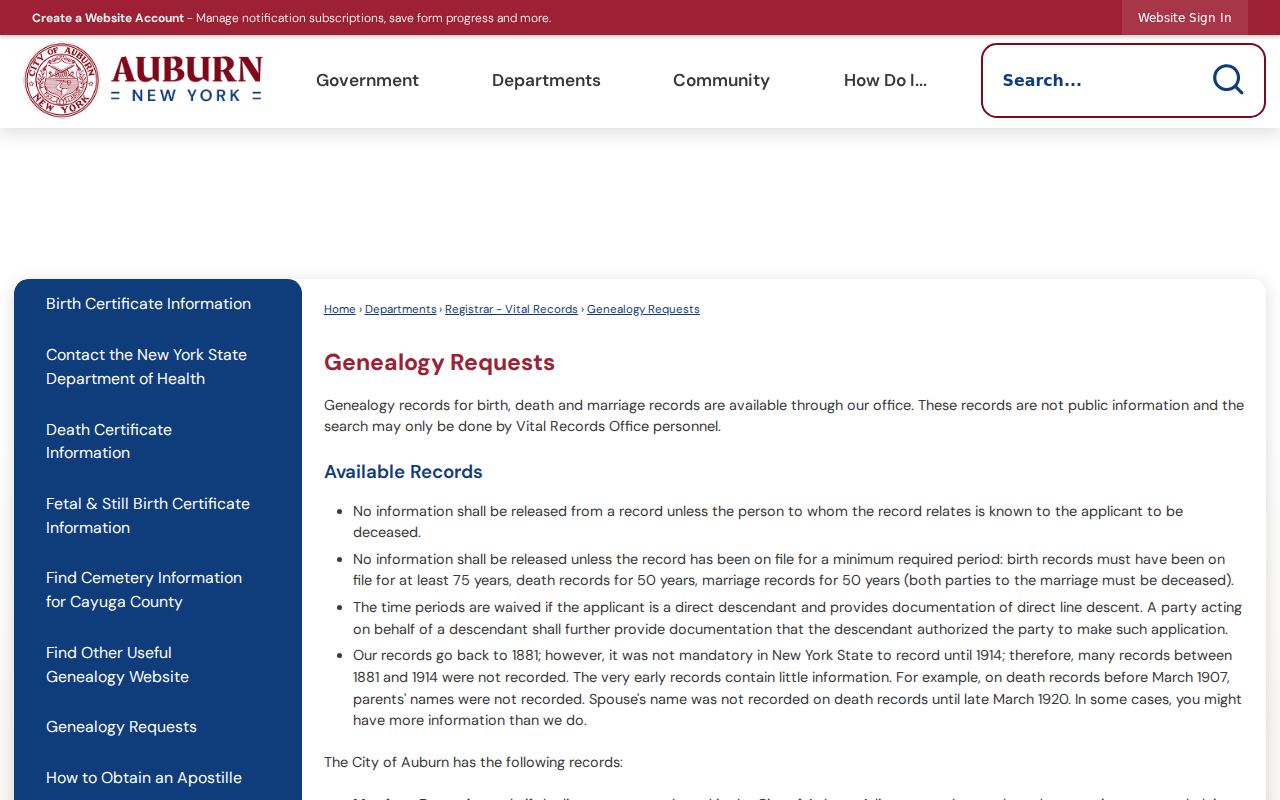
Early death records before March 1907 can lack parent information, and spouse information was not recorded until late March 1920. An Auburn mailing address in Fleming, Throop, Owasco, or Sennett can still place the vital event with that town clerk.
Auburn Safety Records
Some official public-safety tools have narrow purposes and should not be used as a general Auburn residents directory. No public Cayuga County jail roster was located in the official material reviewed. State custody uses a separate DOCCS lookup, and the New York registry is limited to its documented public levels and search rules. A result in one system is not proof of a current ordinary residence.
The New York sex-offender search uses a name, county, or ZIP route with CAPTCHA and presents public Level 2 and Level 3 information.
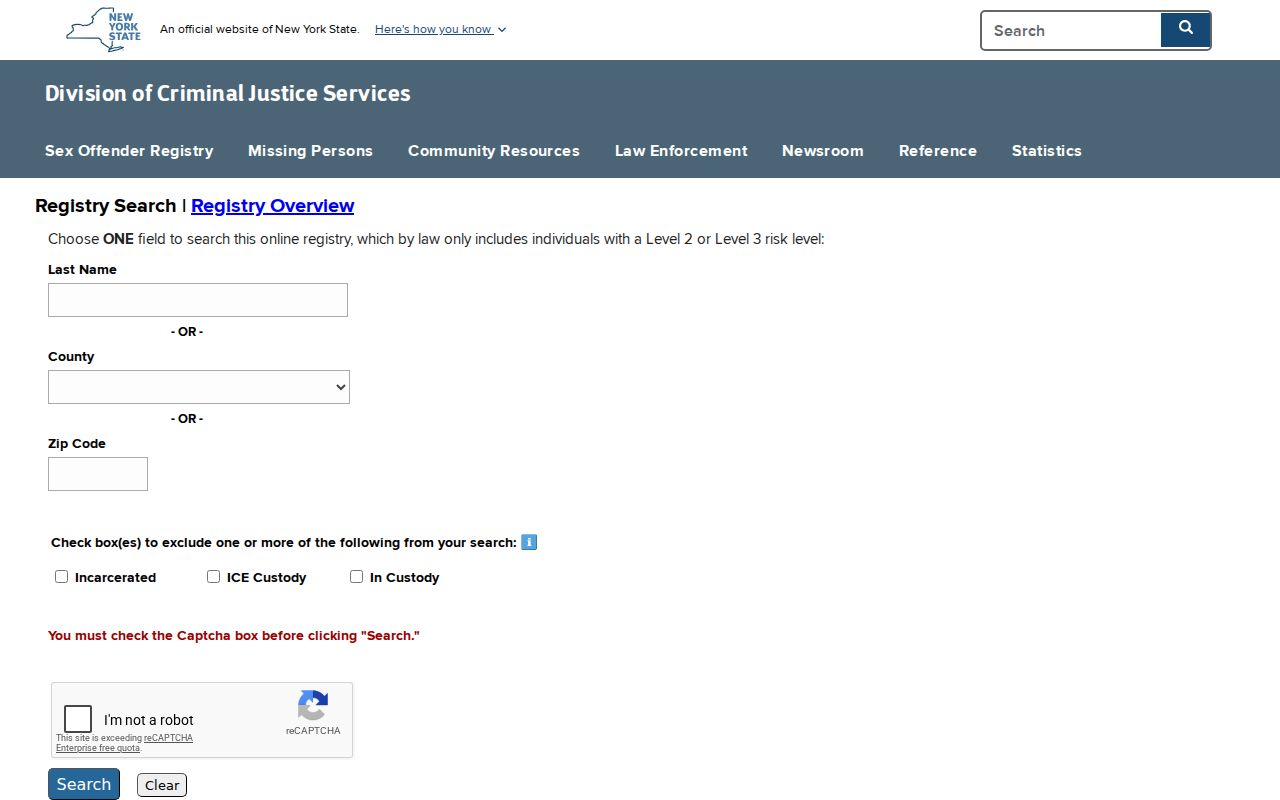
Registry information has a public-safety purpose. It is never permission to contact, threaten, follow, or publish a dossier about a person. Use the issuing agency and access date when interpreting a lawful official result.
Auburn Mail Geography
Postal labels are useful, but they are not city boundaries or resident evidence. Auburn’s 13021 ZIP is standard delivery. ZIP 13022 is for PO Box service, and 13024 is the unique Auburn State Prison ZIP. Auburn mailing addresses can also reach parts of Fleming, Throop, Owasco, Sennett, Aurelius, and Fosterville. A vital event, parcel, or local request may therefore belong to a town custodian even when its mailing city is Auburn.
Use USPS ZIP Lookup to standardize a complete delivery address, then use the GIS municipality and tax-map number to identify the parcel authority. The former Sennett ZIP, 13150, was discontinued in favor of the 13021 last line in 1993. Preserve the printed postal line on an older record before converting it to a current form. A ZIP result describes delivery geography, not a parcel owner or household.
Auburn Record Dates
Records from different Auburn custodians should be read on their own timeline. A GIS popup can show a latest-modified field and a current parcel description, but a recent transfer can lag the map. SearchIQS real-estate images cover 1972 to the present, while older County Deeds, grantor-grantee books, and Historian indexes use separate runs. A city directory entry is tied to its printed edition, not to the day it is searched. A court docket, vital index, and cemetery record also answer questions at different dates.
Keep both the record date and the access date. For a historic address, retain the street form, house number, directory year, page, and abbreviation exactly as printed. For a parcel, retain the municipality, tax-map number, deed reference, and date of the map lookup. The County Clerk, Seymour Library, and County Historian supply the primary material or an archive path when an online result does not reach the period needed. A date label turns an apparent name match into evidence that another researcher can check.
Auburn Official Evidence
Official records and commercial people-finder products are not equivalent. A dated clerk index, map popup, library scan, or court docket identifies its custodian and coverage. A commercial result may combine stale sources, merge people with similar names, and leave an unclear correction path. Start with the primary source, then use the office, library, archive, or formal request route when it does not answer the whole question.
| Source type | Best use | Key limit |
|---|---|---|
| Official portal or clerk index | Locate a specific record series and date | May omit restricted, historical, or unscanned material |
| Library or archive collection | Trace a past household, address, or local event | Requires year, collection context, and sometimes staff help |
| Commercial people-finder category | Never a substitute for the original custodian record | May be stale, mixed, incomplete, or misidentified |
Keep a simple research log with the source URL, query date, record date, jurisdiction, and what the record actually confirms. That discipline makes the Auburn record trail more useful and protects against overstating a name match.